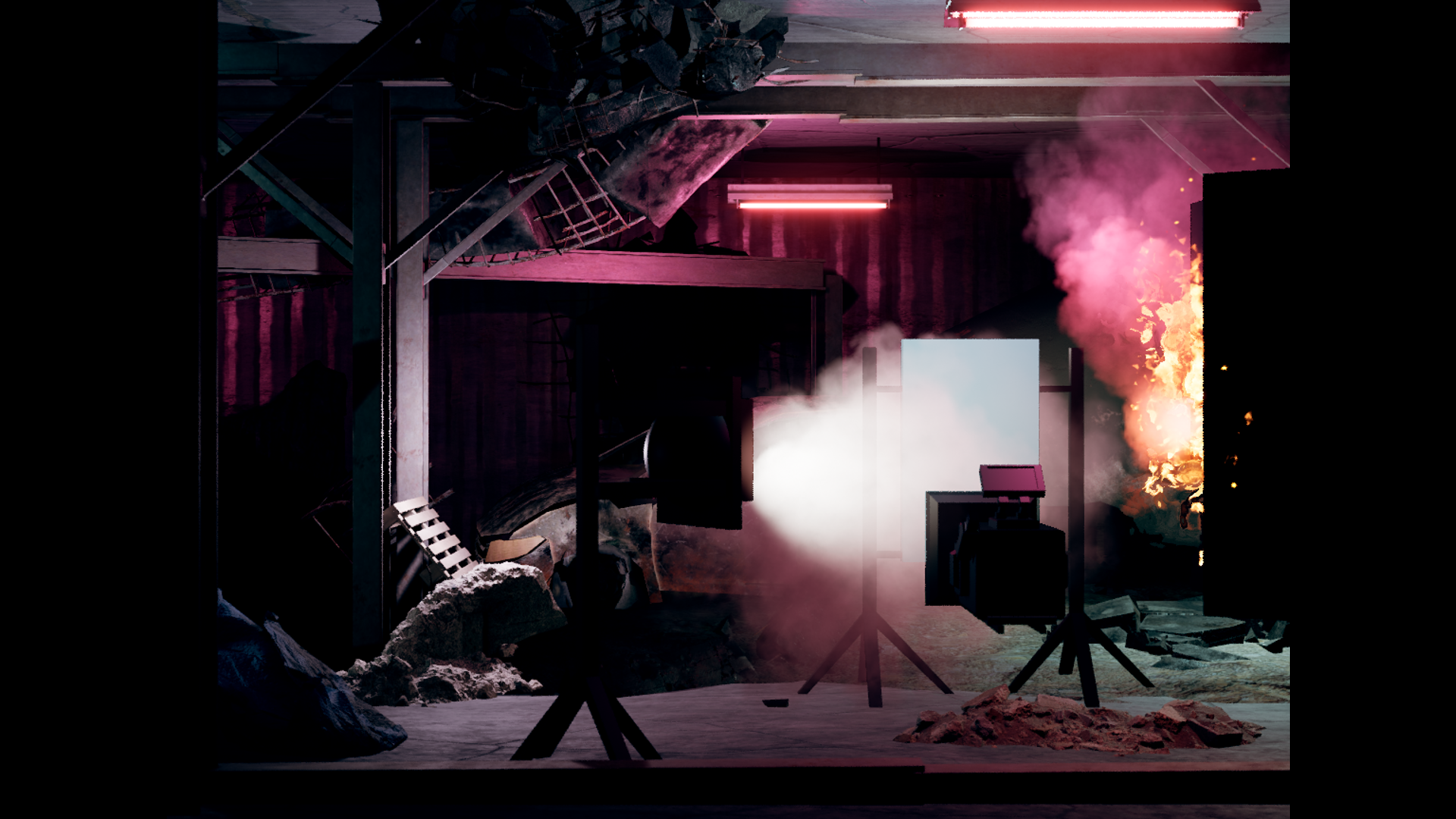
The Embodiment of Land began with a simple, impossible question: what does a place look like once you've already left it, but it hasn't left you? The answer wasn't a memory — it was a habitat. Something that could be built, walked through, and inhabited again.
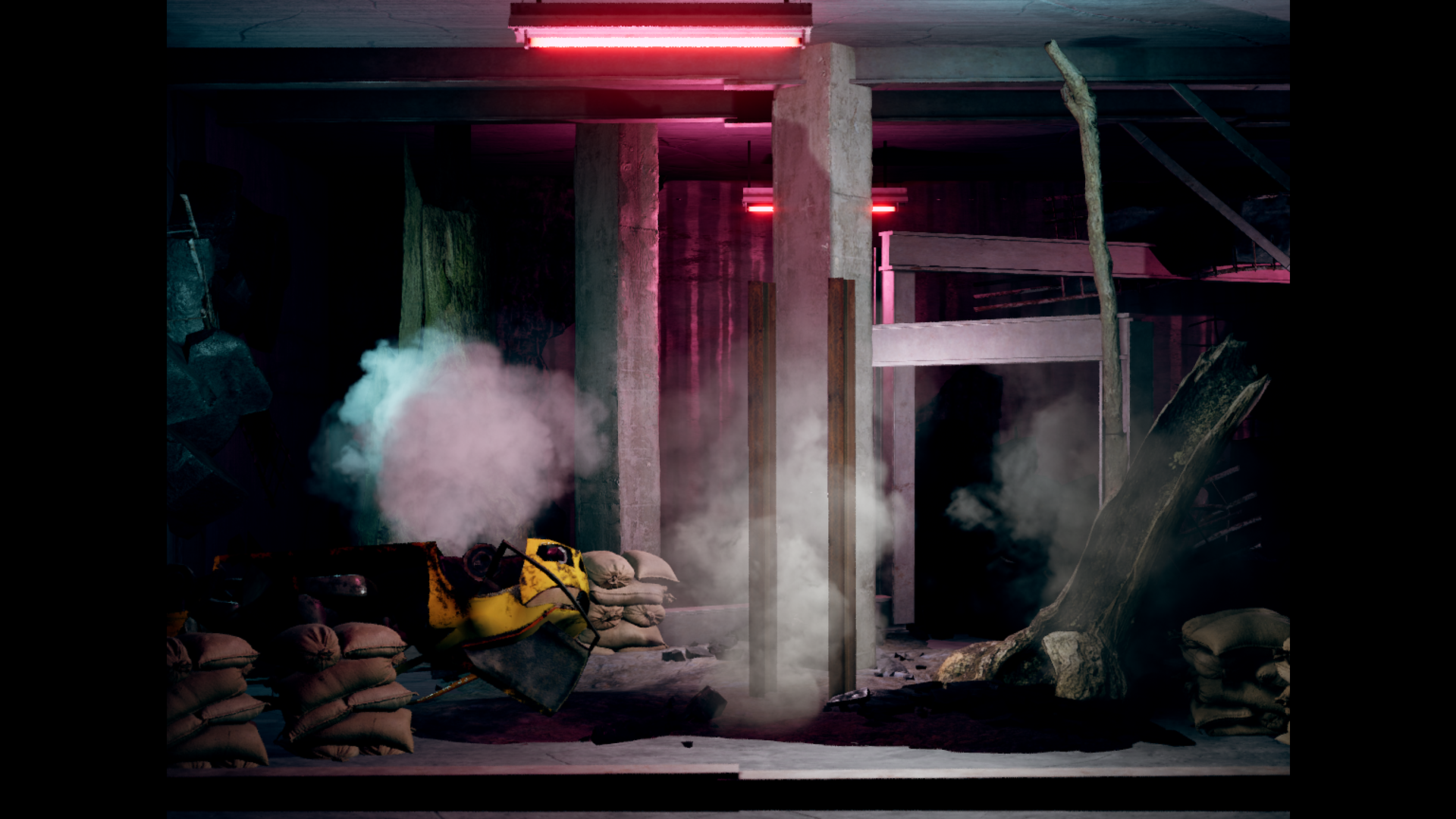
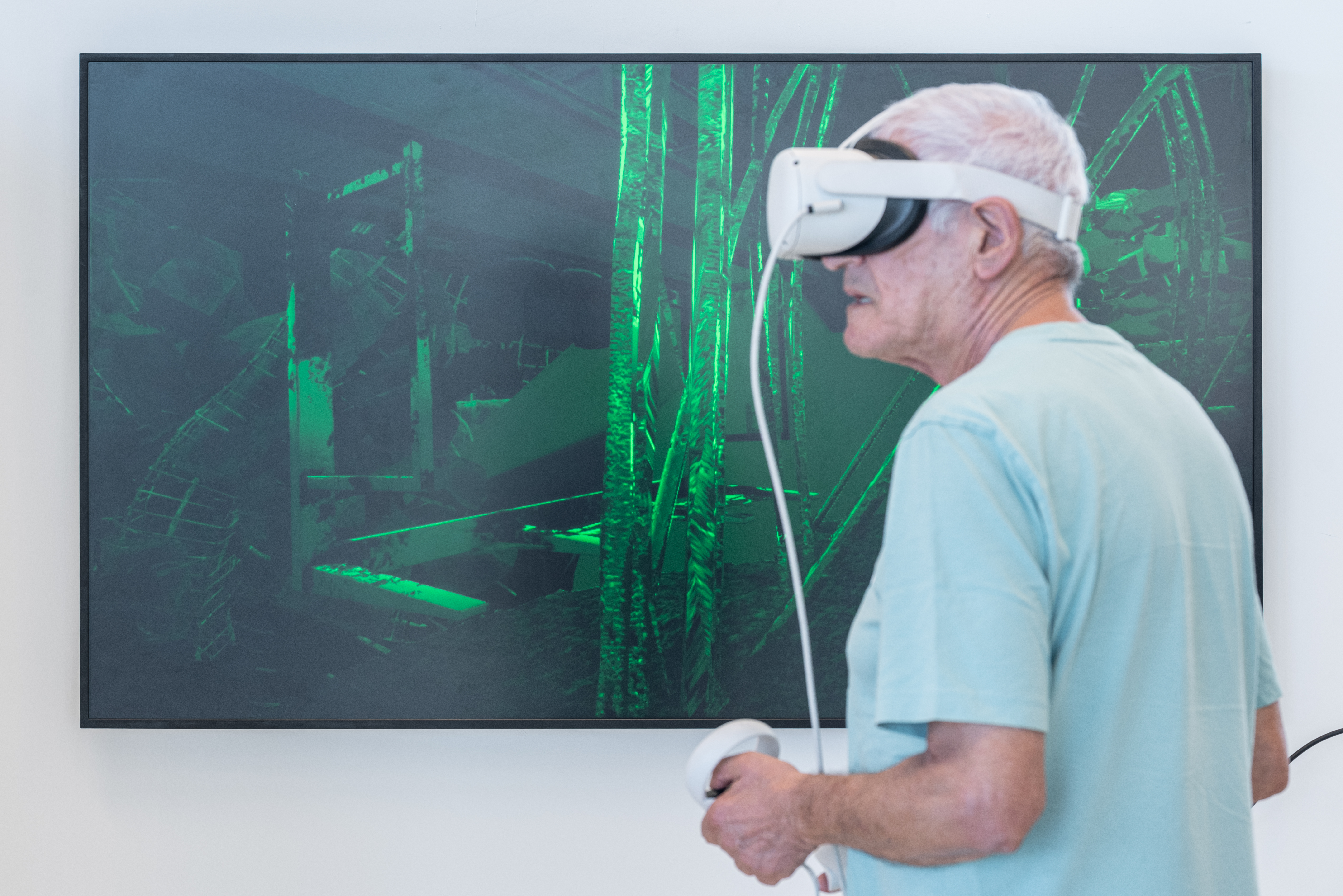
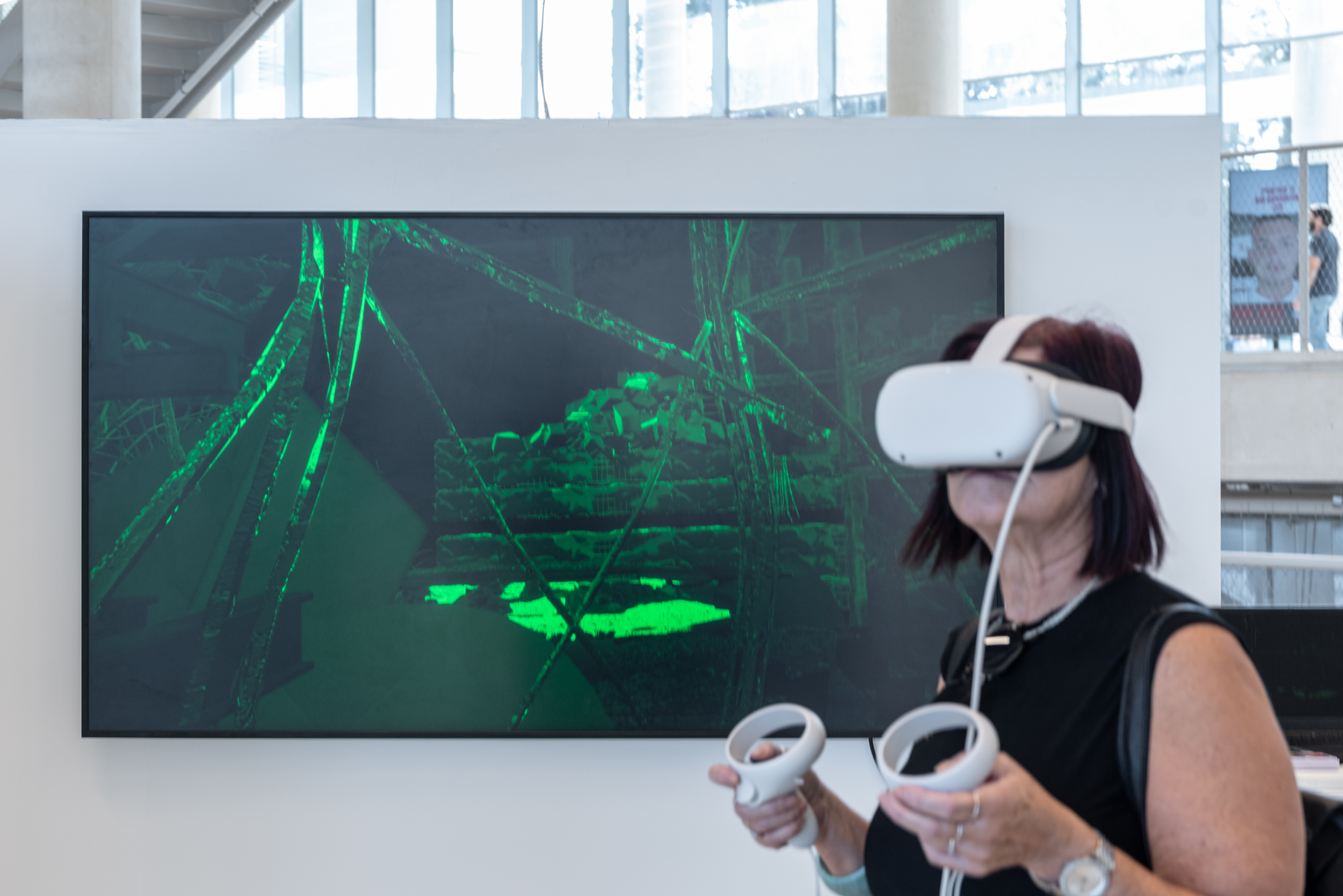
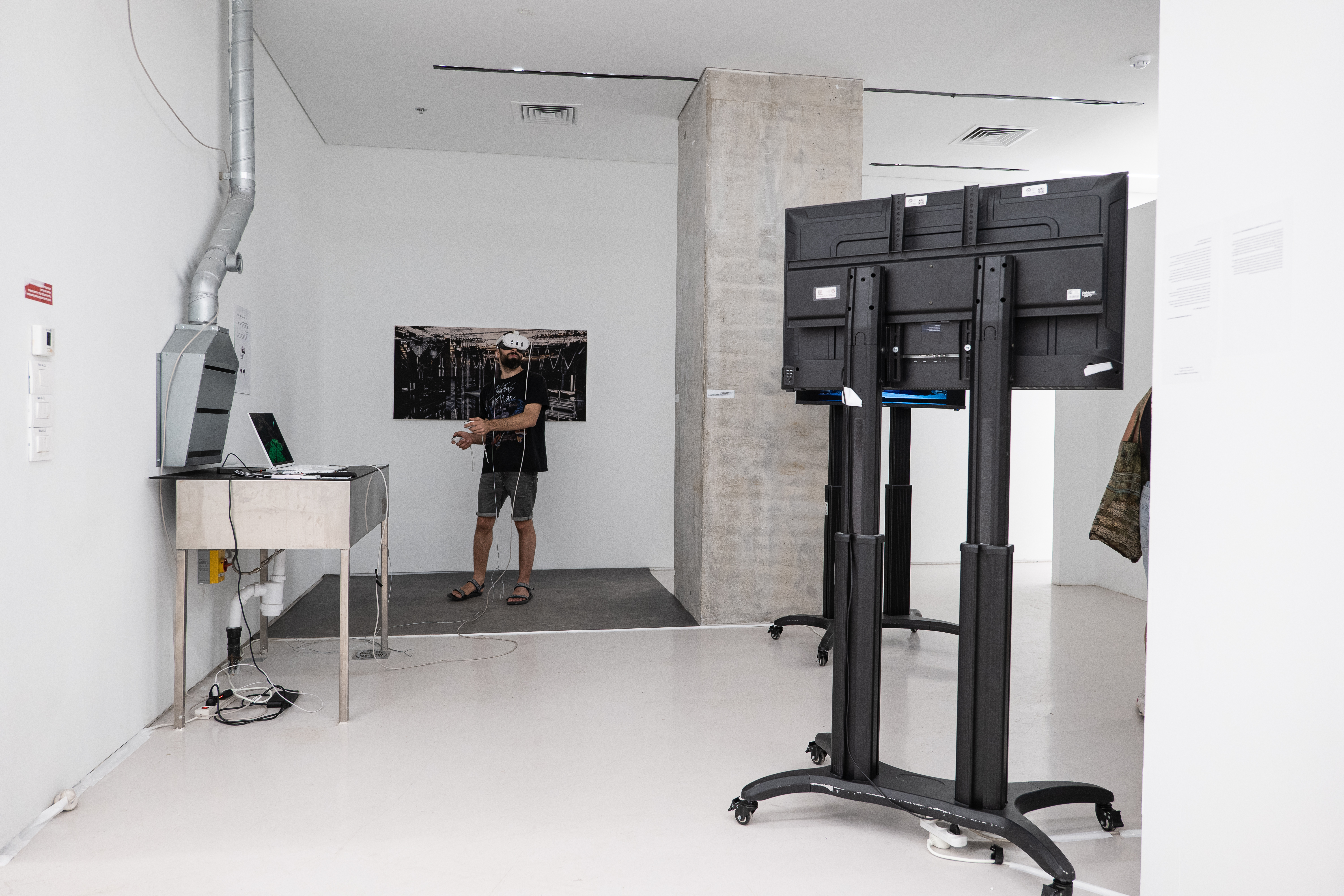
The exhibition exists across overlapping plates. A staged physical set — fire, smoke, sandbags and pink neon — photographed as if it were a frozen still from a film that never existed. A series of 3D-rendered interiors, painted in deep monochromes, where domestic objects collapse into industrial fragments. A VR layer — green night-vision worlds the visitor enters by headset, where the structure dismembers and reassembles in real time.
None of the parts are documentary. The work is not about the war — it's after the war, sitting inside the residue. What gets carried home is not always coherent: a lattice of light, a wall that shouldn't be there, a sound that loops without resolving. The exhibition is an attempt to give that residue a body — a place you can stand inside without naming.
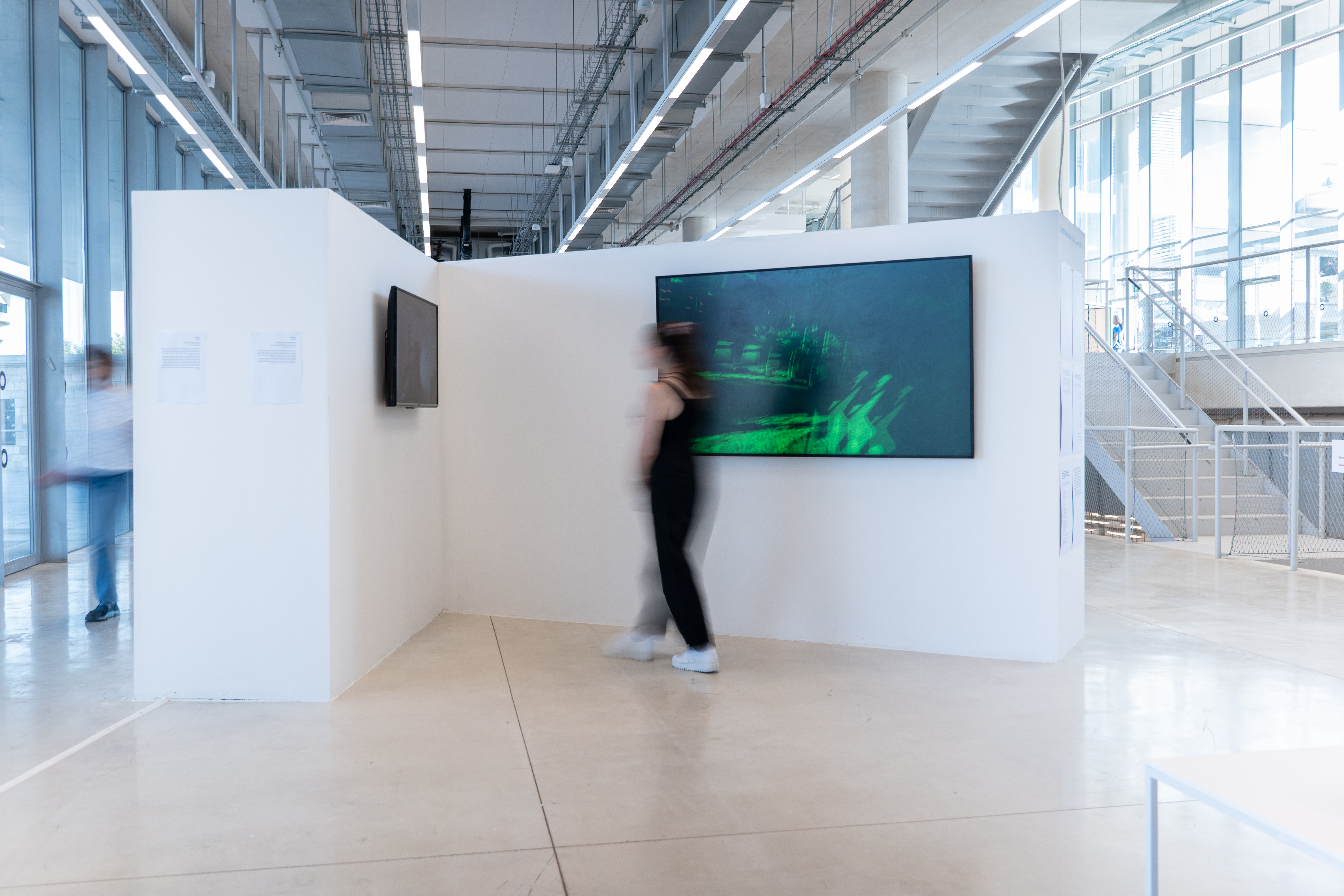
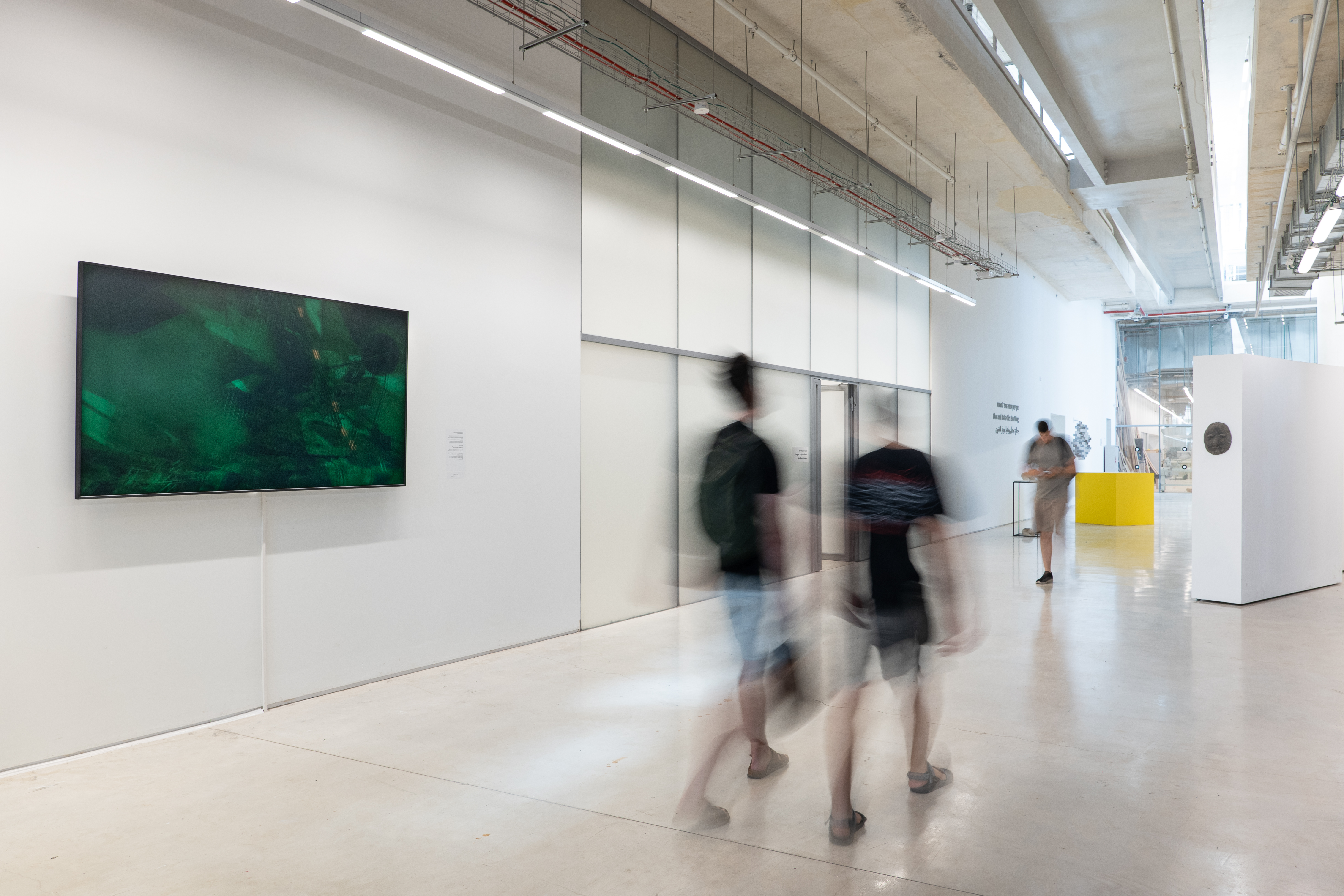
Visitors moved between the printed photographs, the rendered prints, and the headset. Some walked through quickly. Some sat with the green VR world for a long time. The exhibition design accepted both — it was built to be inhabited at any pace.
The Graduate Exhibition.
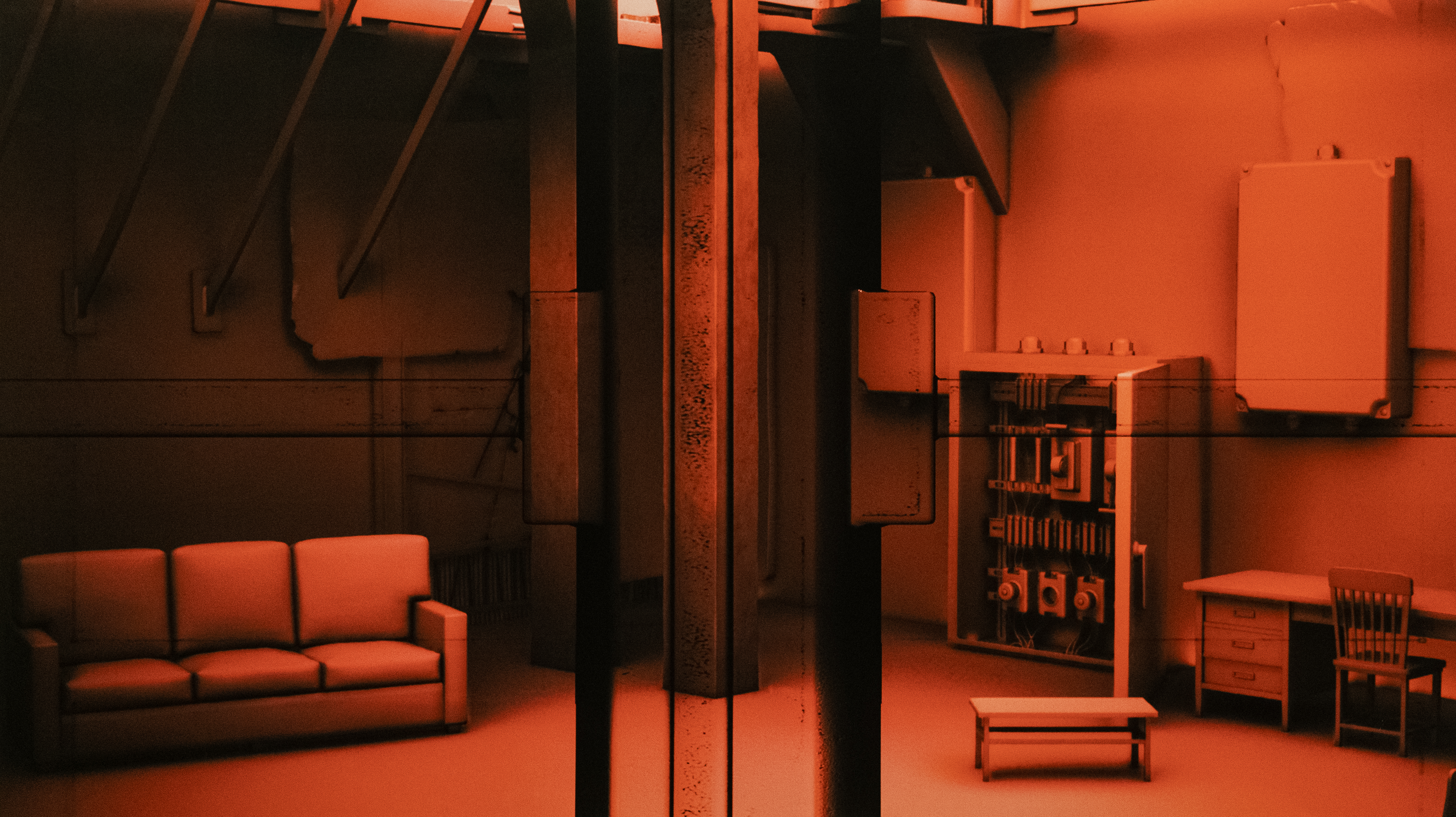
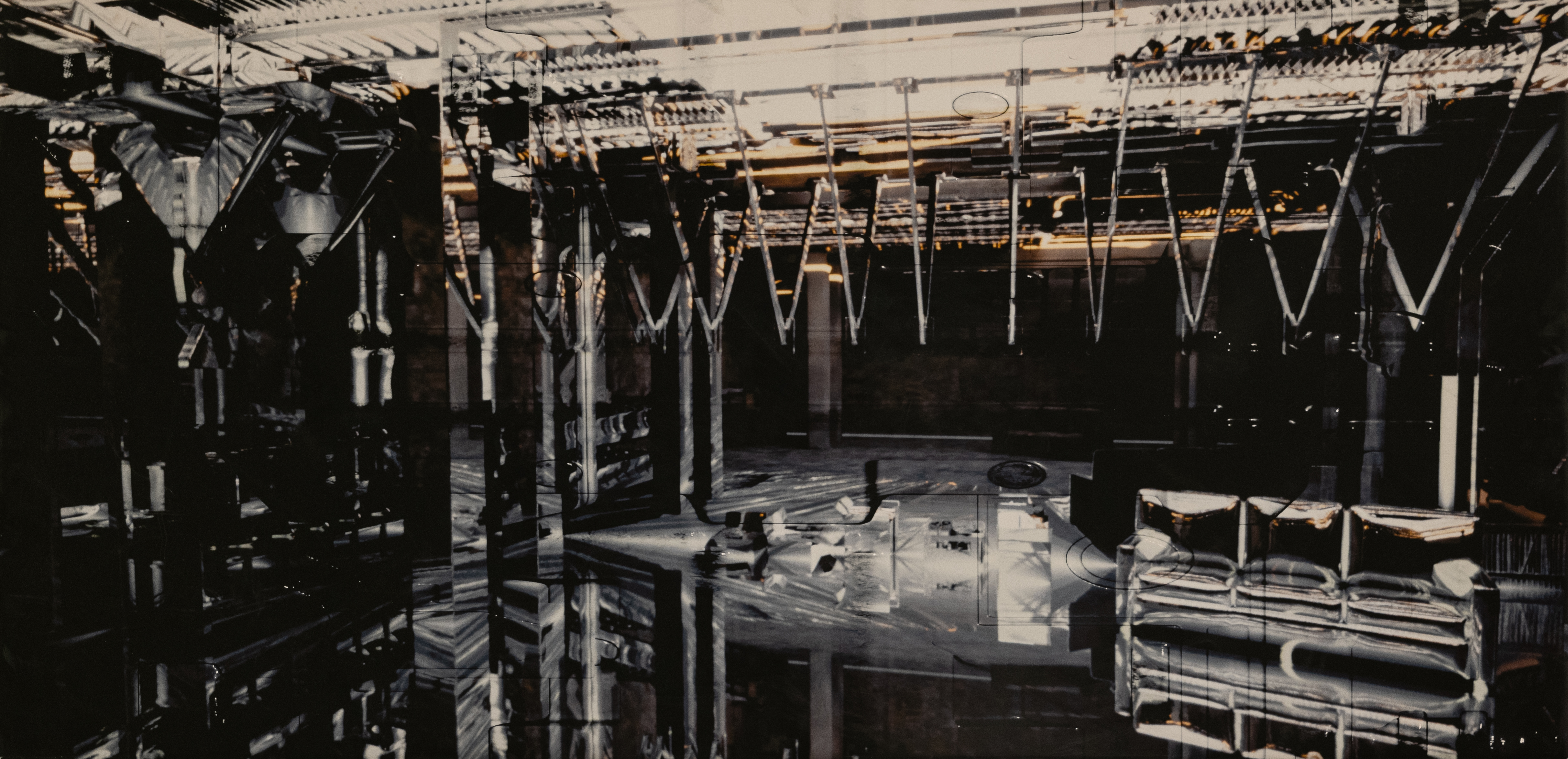
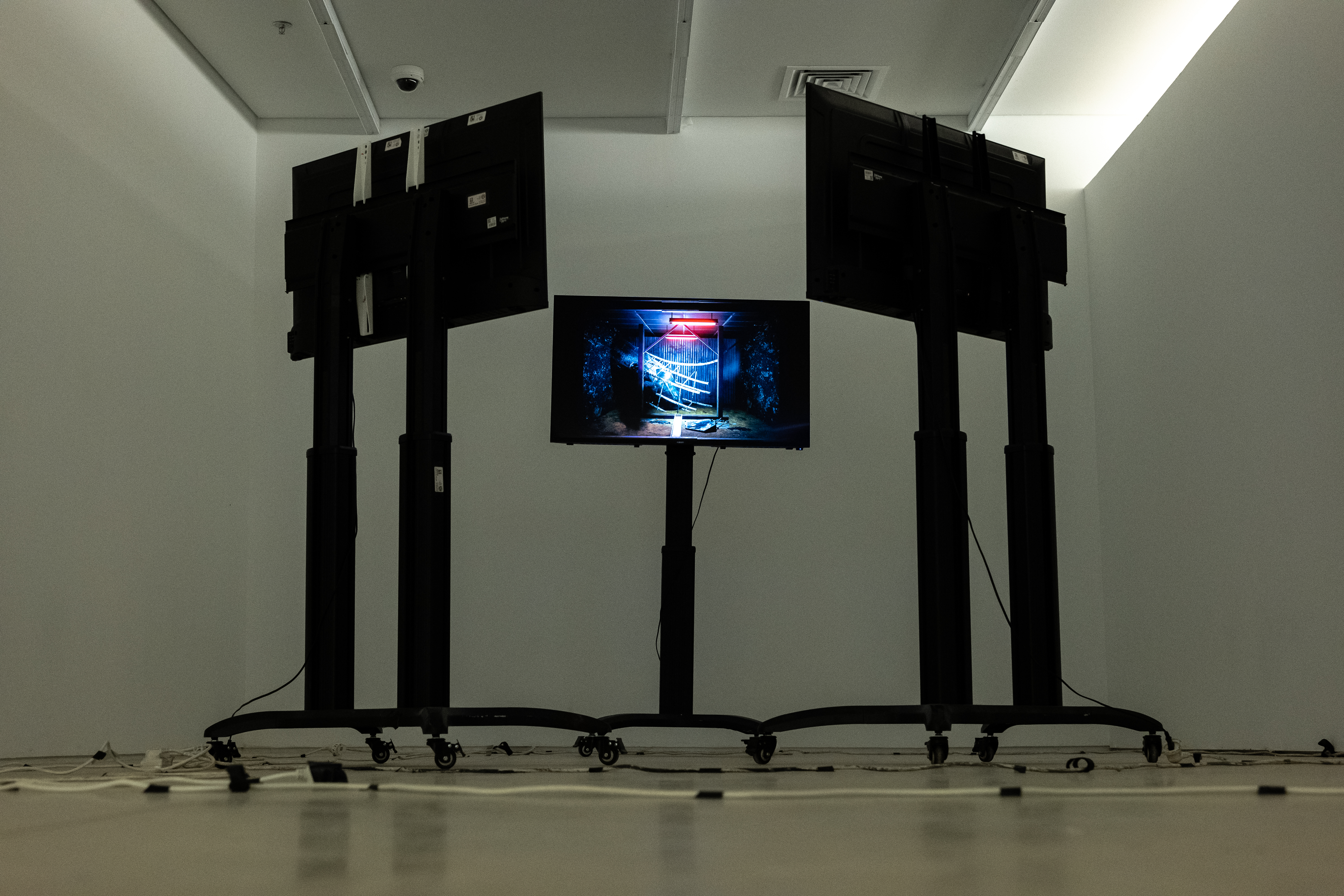
NODES: UpTheSky / ReDWeED.
Night-vision worlds, walked from inside.
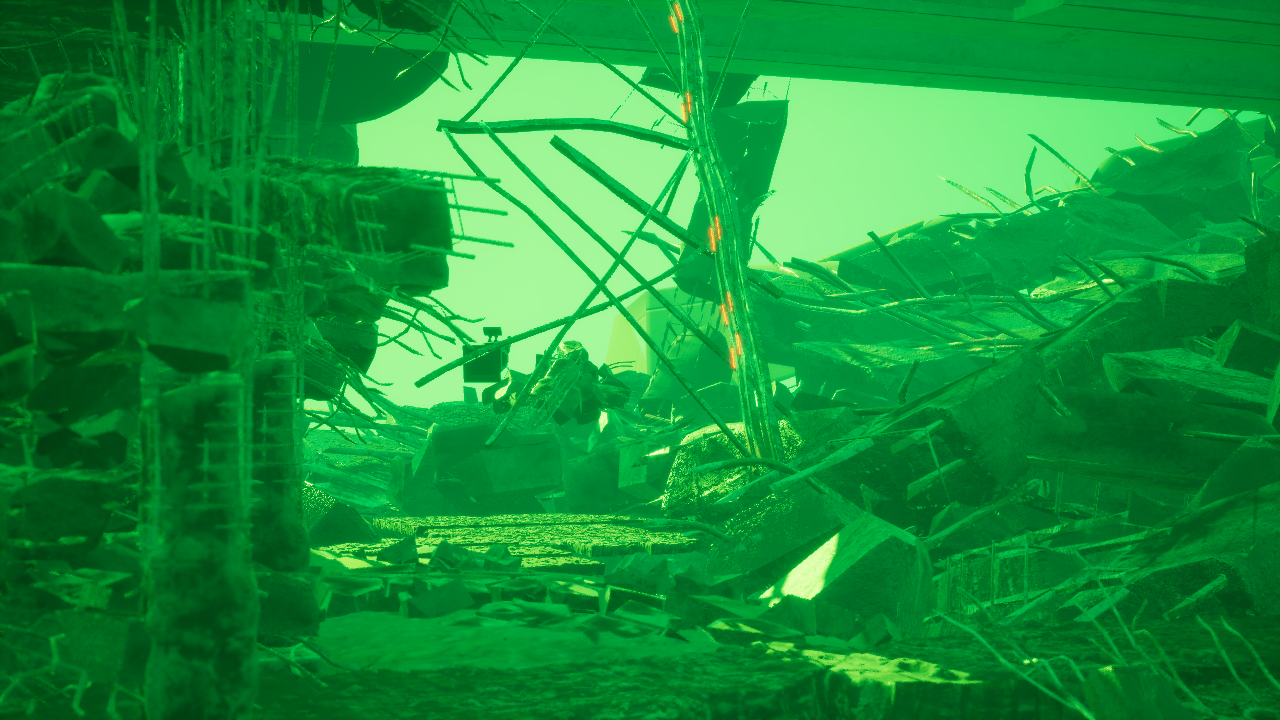
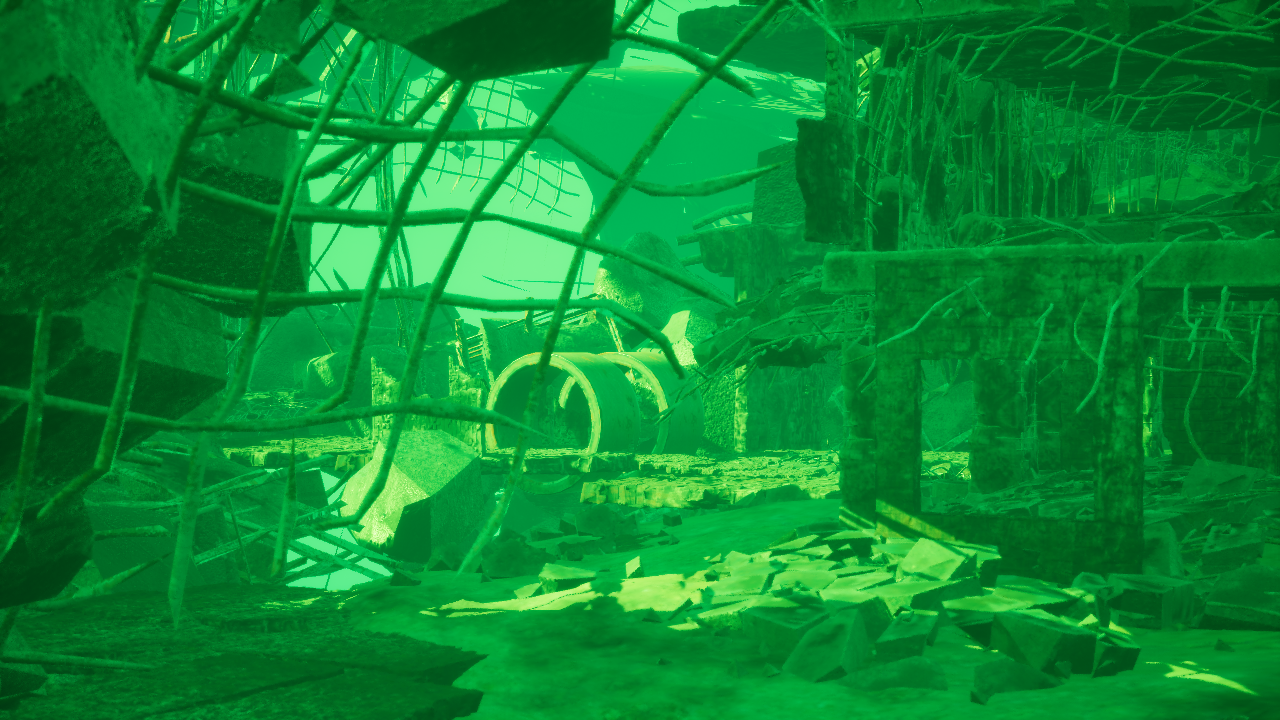
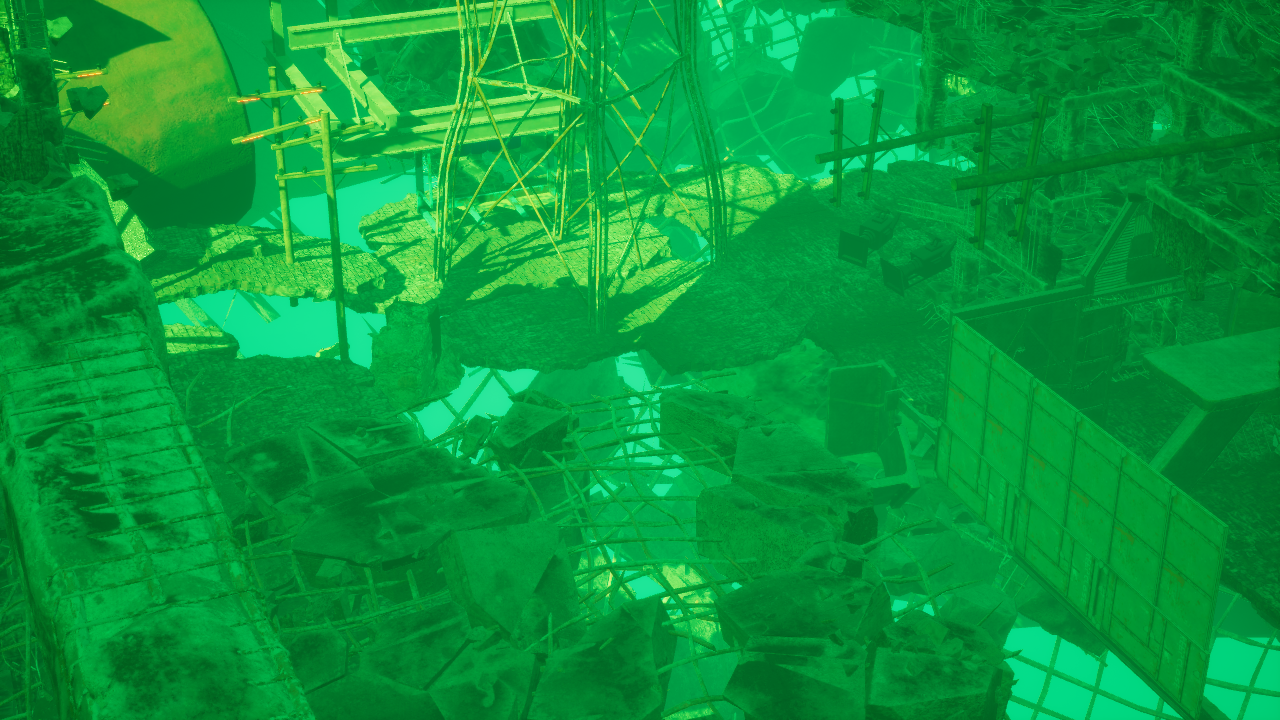
The exhibition, inhabited.
From Blender to Unreal.
Modeling
Architectural fragments and ruined interiors built and sculpted in Blender — domestic geometry, deformed and re-broken until it became inhabitable rather than recognizable.
Real-time
Scenes brought into Unreal Engine 5 for atmosphere, lighting and night-vision shaders. The same geometry rendered again under green light became a different world.
Inhabit
The Unreal scene became VR-walkable. The renders became printed plates. The physical set was built to be photographed once. Three layers of the same space.