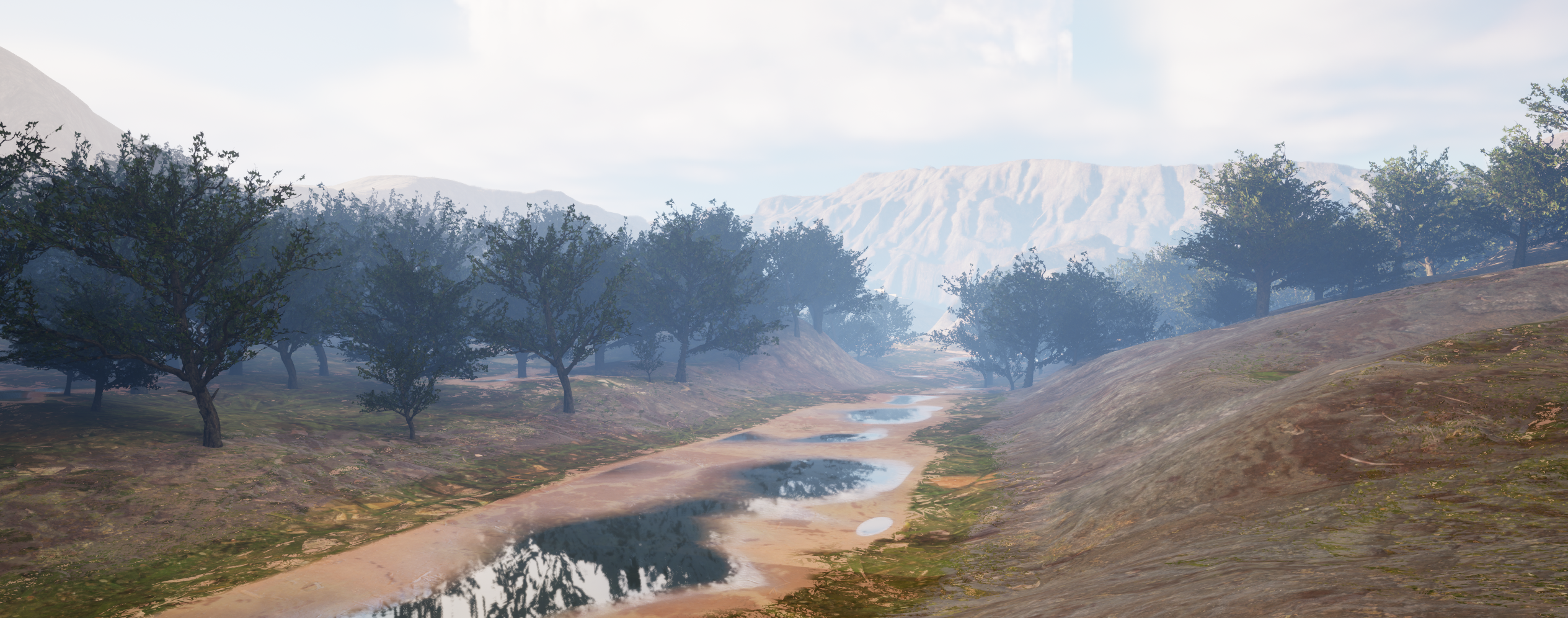
Dust of War began as a question about place. What does a Middle Eastern landscape look like when it isn't framed by news, by conflict, or by the language of foreign cinema — when it's allowed to just be a place: a courtyard, a river, a tree, a wall painted blue?
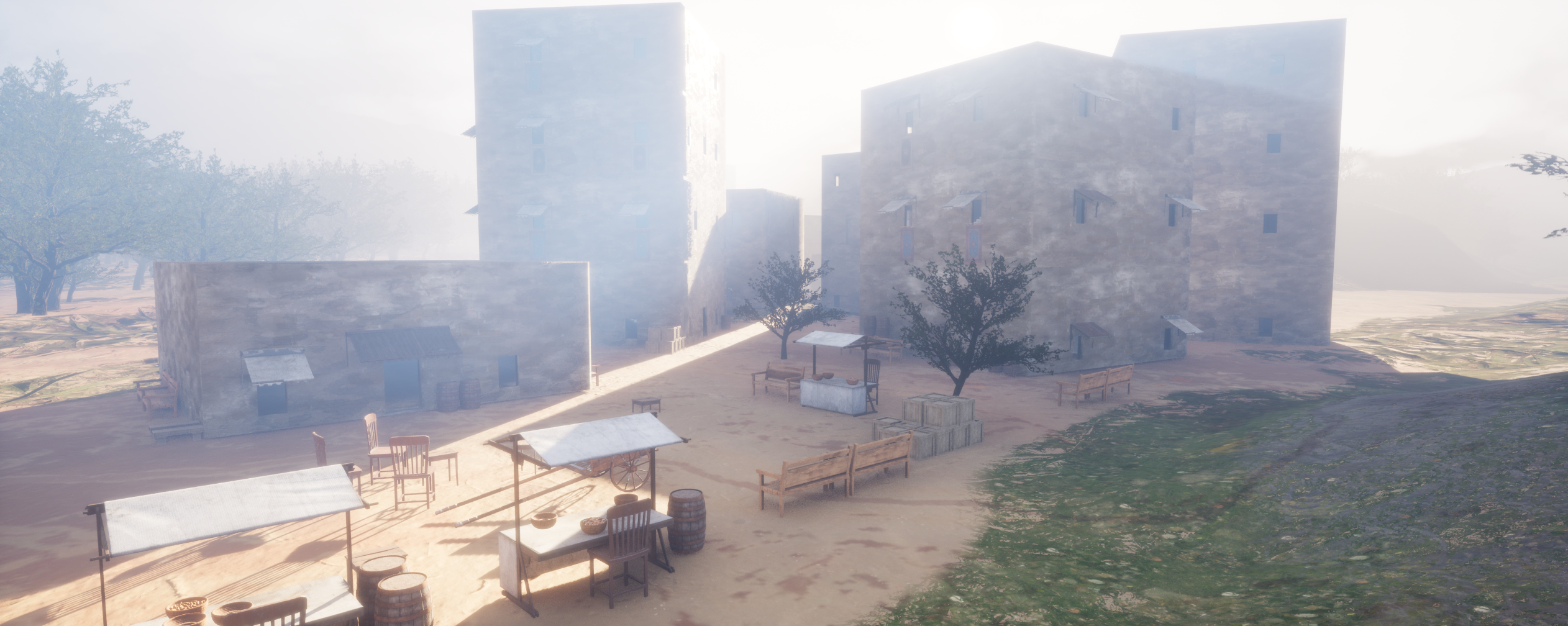
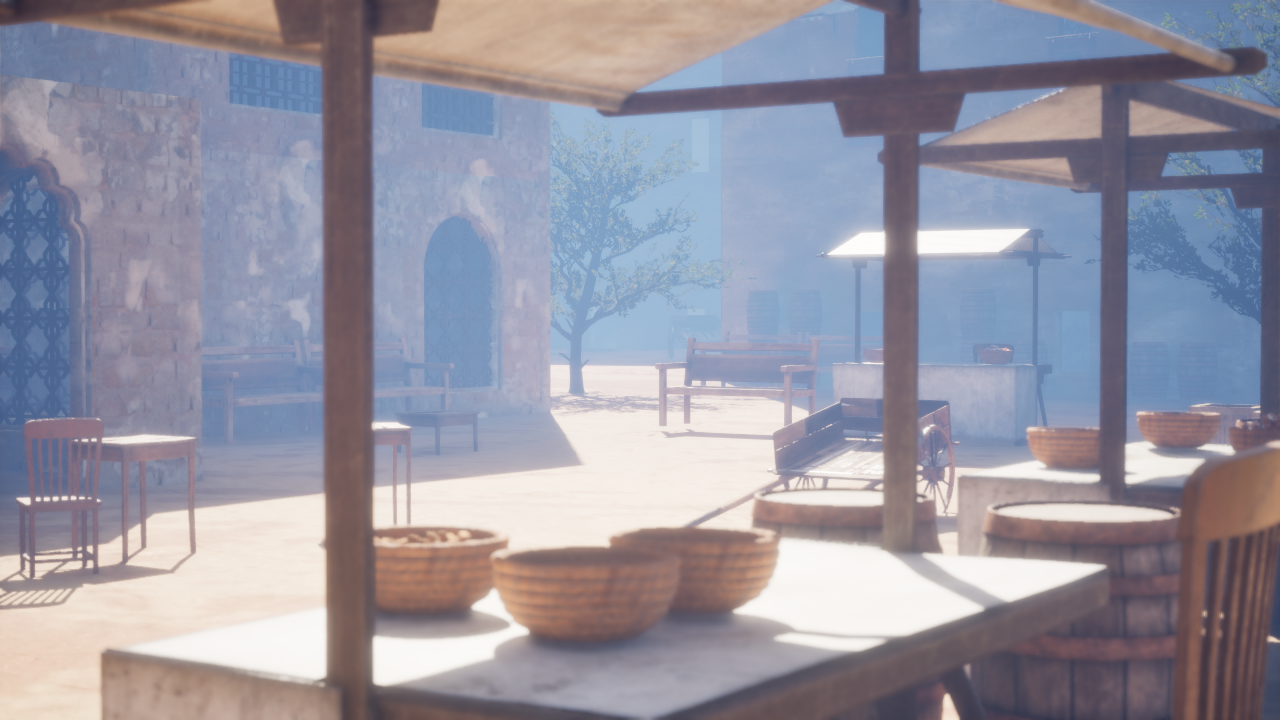
The project builds that landscape one fragment at a time. Open valleys. Stone villages. Blue-painted doors and latticed windows that throw geometric shadows across whitewashed walls. Wooden market stalls, woven baskets, the bleached bones of an awning. Olive groves leaning into the wind. Each piece is modeled, lit and photographed in Unreal Engine 5 as a frame that can stand alone — and as a tile in a larger world that's still being assembled.
The work sits between environment art and cinematic world-building. The intention is not a game in the conventional sense. It's a walkable atmosphere — a place that holds the weight of where it is, the heat of the hours, the silence between calls to prayer.
What you see here is in-development. Some shots are final, others are studies — passes that will keep refining as the world grows.
Villages, valleys, courtyards.
Up close, in the shade.
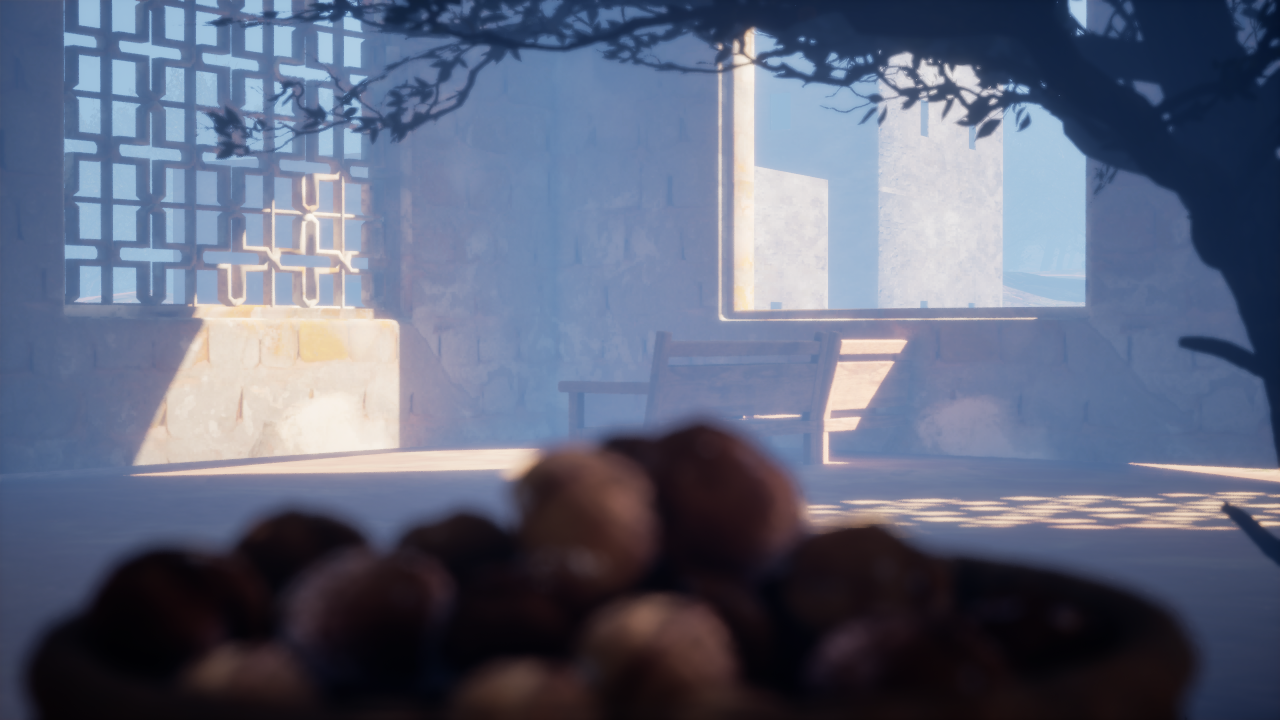
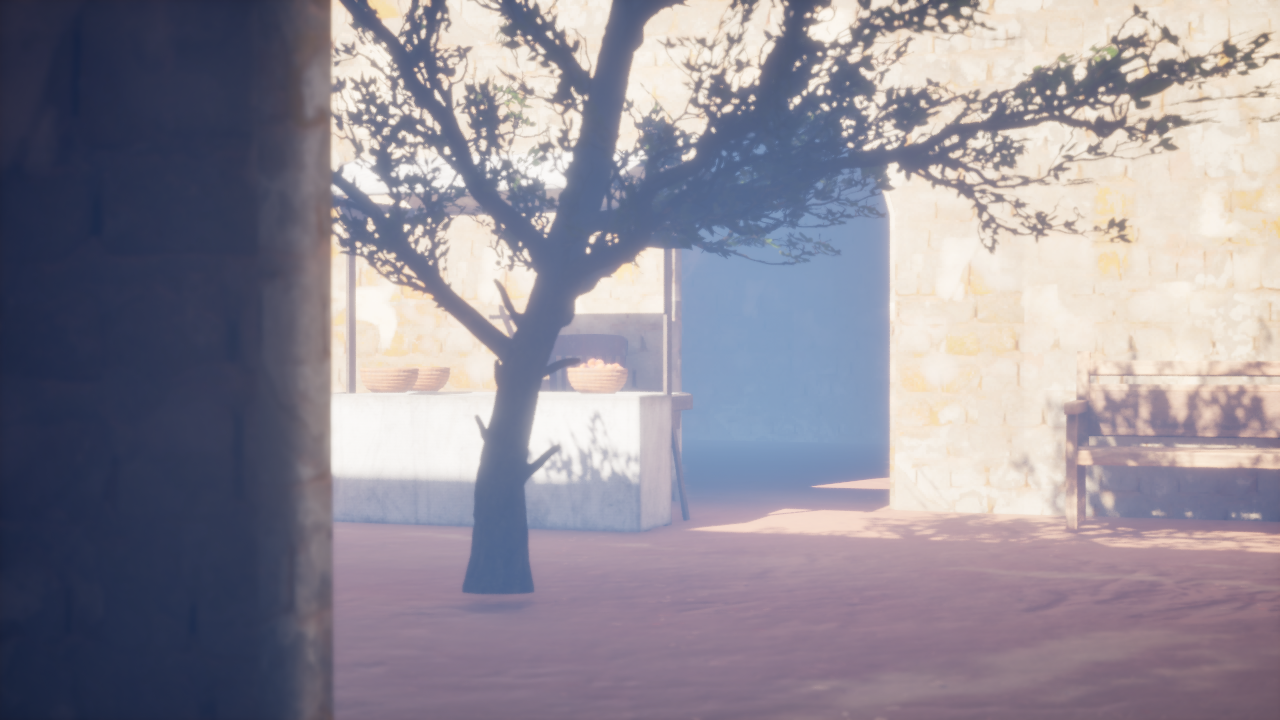
In development.
Dust of War is an active, ongoing project. The world is being built scene by scene — landscape, architecture, props, lighting and atmospherics — with each pass adding density and detail.
For collaborations, exhibitions, or to follow progress, get in touch.
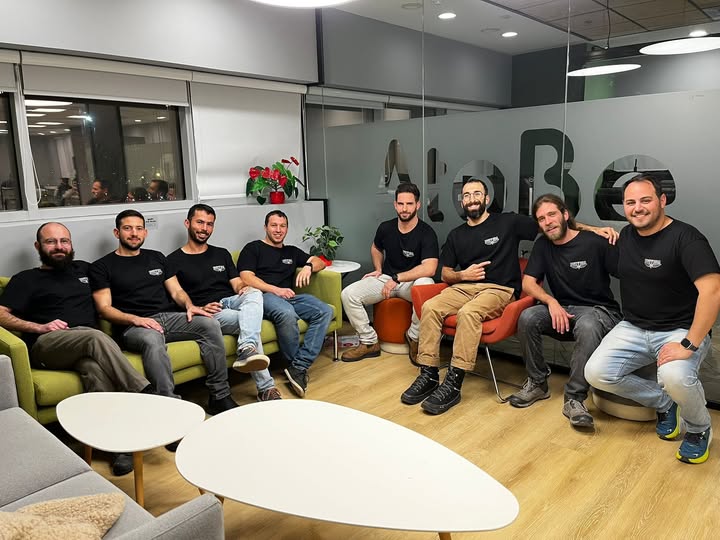
Built with a crew.
Dust of War is a collaborative effort. The world we're assembling has more weight when more hands are pressed into the dust.
Saar — replace this paragraph with team member names & roles, or delete the whole section if you'd rather keep it private.